
Stretching is a simple yet powerful way to improve your physical health, increase flexibility, and reduce muscle tension. You don’t need a gym membership or fancy equipment to enjoy the benefits of stretching—just a little space at home and some consistent practice. This beginner’s guide will help you understand the basics of stretching, provide easy routines to start with, and offer tips to make stretching a regular part of your day.
Why Stretching Matters
Stretching helps maintain the elasticity of muscles and tendons, making your body more flexible and less prone to injury. Regular stretching can:
– Improve your range of motion
– Reduce muscle stiffness and soreness
– Enhance blood circulation
– Promote relaxation and reduce stress
– Support better posture
Whether you spend long hours sitting, are active in sports, or simply want to feel more comfortable in your body, stretching is a great habit to develop.
Types of Stretching
Before you begin stretching at home, it’s helpful to understand the two main types of stretching:
Static Stretching
This involves holding a stretch in a fixed position for a period, typically 15 to 60 seconds. It’s ideal for cooling down after exercise or for improving overall flexibility. For example, bending forward to touch your toes and holding that position is static stretching.
Dynamic Stretching
Dynamic stretches are active movements that take your muscles through their full range of motion without holding the position. They’re great for warming up before exercise. Examples include arm circles or leg swings.
For beginners focused on general flexibility and relaxation, static stretching is usually the best starting point.
Getting Started: What You Need
You don’t need much to start stretching at home. Here’s a simple list:
– A comfortable, quiet space with enough room to move
– A yoga mat, towel, or carpeted floor for cushioning
– Comfortable clothing that allows movement
– Optional: a strap or towel to help with certain stretches
Basic Stretching Routine for Beginners
This routine takes about 10-15 minutes and targets major muscle groups. Perform each stretch gently, without bouncing, and breathe deeply throughout.
1. Neck Stretch
– Sit or stand upright.
– Slowly tilt your head to the right, bringing the ear closer to the shoulder until you feel a gentle stretch.
– Hold for 20-30 seconds, then switch sides.
2. Shoulder Stretch
– Bring your right arm across your chest.
– Use your left hand to gently press the right arm closer to your chest.
– Hold for 20-30 seconds, then switch arms.
3. Triceps Stretch
– Raise your right arm overhead and bend your elbow so your hand reaches down your back.
– Use the left hand to gently press the right elbow down.
– Hold for 20-30 seconds, then switch sides.
4. Chest Opener
– Clasp your hands behind your back and straighten your arms.
– Gently lift your chest and squeeze your shoulder blades together.
– Hold for 20-30 seconds.
5. Seated Forward Fold
– Sit on the floor with legs extended straight in front of you.
– Slowly bend forward from the hips, reaching toward your toes.
– Keep your back straight and hold when you feel a stretch in your hamstrings.
– Hold for 30 seconds.
6. Cat-Cow Stretch (Spine Mobility)
– Get on your hands and knees in a tabletop position.
– Inhale, arch your back, lifting your head and tailbone toward the ceiling (Cow).
– Exhale, round your back, tucking your chin and tailbone (Cat).
– Repeat for 5-8 rounds of breath.
7. Hip Flexor Stretch
– Kneel on your right knee with the left foot in front, knee bent at 90 degrees.
– Shift your weight forward slightly to feel a stretch in the right hip flexor.
– Hold for 20-30 seconds, then switch sides.
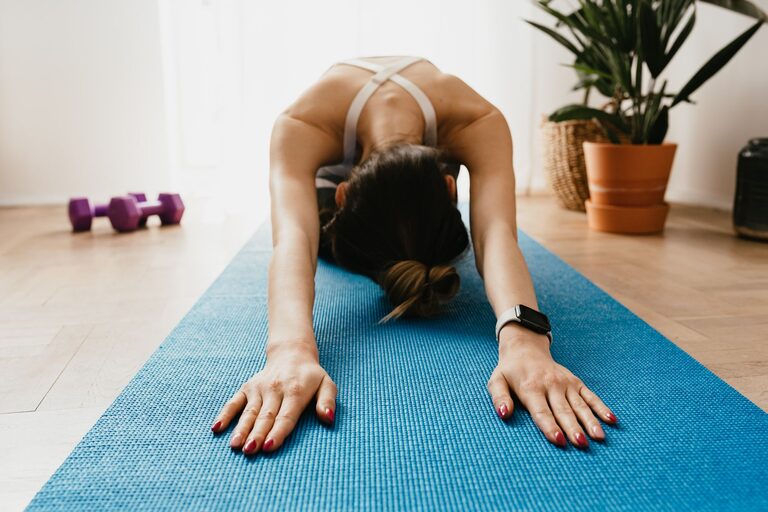
8. Child’s Pose (Relaxation)
– From a kneeling position, sit back on your heels and stretch your arms forward on the floor.
– Rest your forehead on the ground and breathe deeply for 30 seconds or more.
Tips for Safe and Effective Stretching
– Warm up first: Stretching cold muscles can cause injury. Do a light walk or march in place for a few minutes before stretching.
– Don’t force it: Stretch to the point of mild tension, never pain. Ease into each stretch.
– Hold steady: Avoid bouncing or jerky movements. Holding steady allows muscles to relax and lengthen.
– Breathe deeply: Deep breaths help relax your muscles and increase oxygen flow.
– Be consistent: Aim to stretch at least 3-4 times per week for noticeable improvements.
– Listen to your body: If you feel sharp pain or discomfort, stop and adjust the stretch.
When to Stretch
You can incorporate stretching at various times:
– Morning: Wake up your body and increase blood flow
– Before exercise: Do dynamic stretches to warm up muscles
– After exercise: Use static stretching to cool down and prevent stiffness
– During breaks: Stretch during work or study breaks to relieve tension, especially if you sit a lot
– Evening: Stretch before bed to relax your body and improve sleep quality
Final Thoughts
Stretching is an easy and accessible way to enhance your health and well-being from the comfort of your home. Starting with gentle, simple routines can help improve flexibility, reduce muscle tightness, and support better posture. Remember to be patient and consistent, and soon stretching will become a helpful part of your daily routine.
Happy stretching!